

 0
0


 Continue with Google
 Continue with Facebook
Tuesday 30 December, 2025
Which iPhone Should You Buy? (iPhone 17 vs iPhone 16 vs iPhone Air)
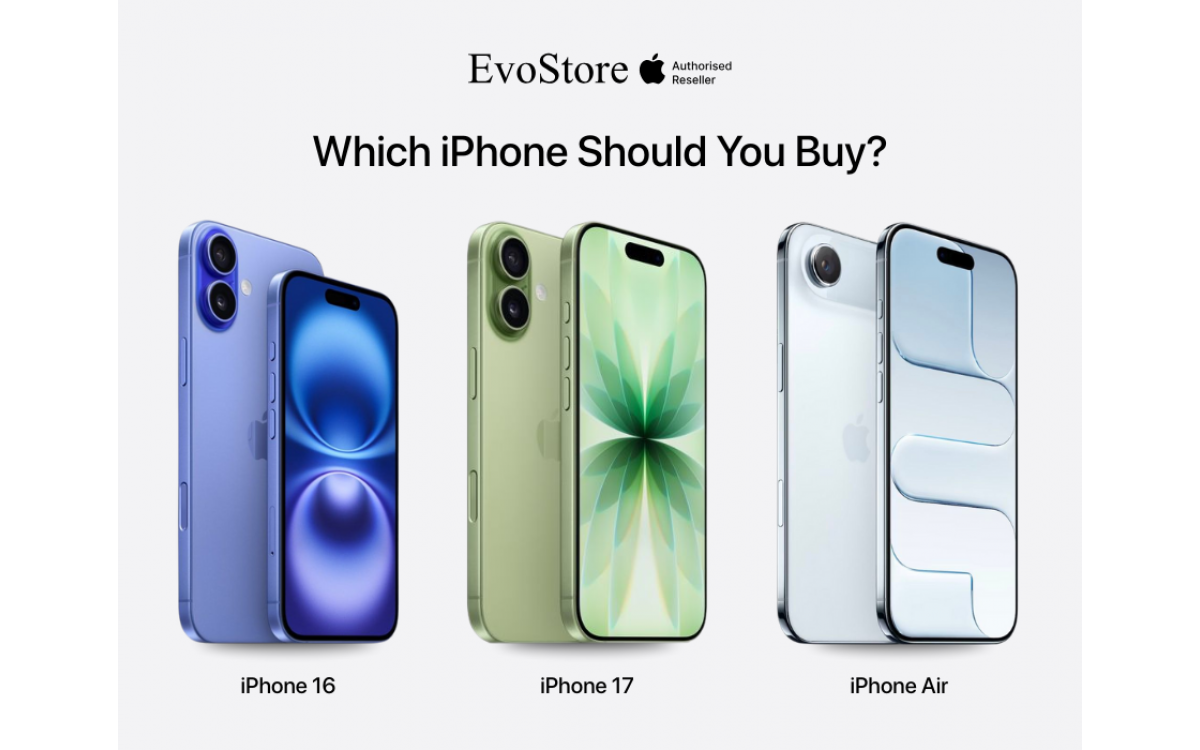
Apple makes it hard this year. You walk into EvoStore and you see three shiny objects. One is the new standard of phones, one seems like a steal and then the other one is thinner than your breakfast biscuits.
Now, if you’re a casual buyer, this will most certainly be an endless loop of decisions. This guide will help you choose between the new iPhone 17 and iPhone Air while also considering the iPhone 16. We’ve taken various factors into account all the way from the use case of the phones to the future-proofing factor of these phones.
Use Case
iPhone 17
The iPhone 17 targets the majority. This model balances performance, battery, and features perfectly. You get the latest updates without the "Pro" price tag. If you want a phone to last five years, handle heavy apps, and take excellent photos, pick this one.
Students, office workers, and casual gamers will find the iPhone 17 fits every requirement. The device handles multitasking without breaking a sweat. Social media browsing feels smooth. This phone works as a reliable tool for almost everyone.
iPhone Air
The iPhone Air serves a specific niche. This device prioritizes form over specs. If you hate bulky pockets or heavy bags, the Air solves the problem. Fashion-conscious users will appreciate the ultra-thin 5.6mm profile.
For example, business professionals who want a sleek device for meetings will prefer the Air. You sacrifice some camera versatility and battery endurance for this design. Light users who value aesthetics and portability above all else should choose the Air. This model turns heads.
iPhone 16
The iPhone 16 appeals to the budget-conscious. This previous-generation model still performs exceptionally well. You save money while staying in the Apple ecosystem. First-time iPhone buyers in Nepal should look here.
If you upgrade from an iPhone 11 or 12, the 16 feels like a massive leap. Users who do not care about 120Hz screens or the absolute fastest chip will be happy. The iPhone 16 still handles whatever you throw at it with ease. But not as good as the iPhone 17.
Price
iPhone 17
The iPhone 17 price in nepal starts at NPR 157,299, with the Pro and Pro Max models costing higher. EvoStore offers EMI plans to manage this cost if you choose to pay in installments. Our partnered banks provide easy monthly installment options. You pay for longevity here. The extra investment now saves money on upgrades later.
iPhone Air
The iPhone Air Price in Nepal sits at a higher price tier. It starts at NPR 200,999. You pay extra for the engineering required to make the device thin and the performance boost over the base iPhone 17. This phone creates a luxury category. If the budget restricts you, the Air might not make sense. If style matters most, the price reflects the exclusivity.
iPhone 16
The iPhone 16 Price in Nepal starts at NPR 135,299. You get 90% of the flagship experience for a lower cost. EvoStore frequently runs promotions on this model. Comparing the EMI for a 16 versus a 17 shows a significant monthly difference. Budget-conscious buyers looking to maximize value will find the 16 attractive.
Performance
iPhone 17
The iPhone 17 runs on the A19 chip. This processor handles everything you throw at the device. Gaming performance sees a jump. AI tasks run locally on the device with speed. Editing 4K video happens instantly. You will notice zero lag. Apps open immediately. The 8GB of RAM ensures multitasking stays fluid. This chip guarantees the phone remains fast for years.
For power users looking to maximize their phone usage even more, the iPhone 17 Pro Price In nepal and the iPhone 17 Pro Max Price in Nepal models remain solid options as well. But for most, the base iPhone 17 has plenty of power.
iPhone Air
Surprisingly, the iPhone Air houses the A19 Pro chip. This matches the Pro and the Pro Max models of the iPhone 17. The decision to put a Pro chip in the Air seems odd given the thermal constraints, but the performance screams speed. Burst performance rivals the iPhone 17.
However, sustained performance might see a dip due to the thin design. Heat dissipation becomes a challenge in such a slim body. For short bursts of intense work, the Air excels.
iPhone 16
The iPhone 16 uses the A18 chip, but you shouldn’t underestimate this processor. The A18 crushes most competitors. You will struggle to find a task this chip fails to execute. Heavy gaming remains possible. Video editing works fine. The difference between A18 and A19 appears minimal in daily use. Only power users pushing the limits will notice the gap.
Display and Form Factor
iPhone 17
The iPhone 17 brings a massive upgrade: ProMotion. The screen refreshes at 120Hz. Scrolling feels buttery smooth. Animations look fluid. Once you see 120Hz, going back to 60Hz feels jarring. The 6.3-inch display size hits the sweet spot. The bezel reduction makes the screen feel larger without increasing the phone size. The aluminum body feels sturdy. Ceramic Shield 2 protects the glass better than ever.
iPhone Air
The iPhone Air shocks you when you hold the device. 5.6mm thickness defies logic. The phone disappears in a pocket. The titanium frame adds rigidity despite the thinness. The 6.5-inch screen offers more vertical space.
You get a large canvas in a body weighing less than the smaller iPhone 17. Holding the Air feels futuristic. The "Liquid Glass" UI elements pop on the screen. However, the thinness makes the device harder to grip for some. You might need a case, which adds bulk back.
iPhone 16
The iPhone 16 sticks to the familiar 6.1-inch size. The 60Hz screen remains the biggest drawback. Scrolling looks choppier compared to the 17. However, the colors and brightness still look fantastic. The design feels comfortable and proven. If you used an iPhone before, this feels right at home. The aluminum build resists drops well.
Camera Capabilities
iPhone 17
The iPhone 17 features two 48MP cameras. The main lens captures incredible detail. The ultrawide lens now also shoots at 48MP. This allows for sharper landscape shots. Low light performance sees a major jump.
The "Fusion" tech allows for a 2x lossless zoom by cropping the sensor. You effectively get three focal lengths. The 18MP selfie camera ensures your video calls look professional. Center Stage keeps you in the frame automatically.
iPhone Air
The Air makes a bold sacrifice. You get only one rear camera. A single 48MP Fusion lens sits on the back. No ultrawide lens exists. No telephoto lens exists. You rely on the main sensor for everything. The 2x crop helps, but you lose the ability to take wide group shots or zoomed-in portraits.
The camera "plateau" design looks unique but limits functionality. If you take simple photos, the main lens performs beautifully. If you love creative photography, the Air limits options. The front camera matches the 17 with 18MP resolution.
iPhone 16
The iPhone 16 sports a 48MP main and 12MP ultrawide. The pictures look great. The 12MP ultrawide lacks the sharpness of the 17's 48MP version. Low light shots might show some noise. Video quality remains industry-leading.
For social media posts, this camera system suffices. You miss out on the advanced "Fusion" processing of the newer models but still get excellent results.
Battery Life
iPhone 17
The iPhone 17 houses a dense battery. The efficient A19 chip helps extend runtimes. You can expect 25+ hours of video playback. Heavy users will get through a full day with 20% left. Charging speeds have increased to 30W wired. MagSafe charges faster now too. This phone relies on efficiency to last.
iPhone Air
The thin body of the Air leaves less room for chemical energy storage. Apple optimized the A19 Pro to sip power, but physics wins. The battery capacity is lower than the 17. Expect to charge this device before your day ends if you use the phone heavily. Light users will survive the day. The "Air" moniker implies lightness, and the battery takes a hit. 20W charging limits apply here to prevent heat buildup in the thin chassis.
iPhone 16
The iPhone 16 offers solid battery life. The A18 chip manages power well. You will get through a work day easily. The slightly thicker body compared to the Air allows for a larger battery cell. Many users find the 16 lasts longer than the Air in real-world tests.
Future-Proofing
iPhone 17
The iPhone 17 wins here. 8GB RAM, A19 chip, and 120Hz screen mean this phone will feel "current" for 5 years. Software updates will arrive until 2030 or beyond. The 48MP ultrawide adds to the longevity.
iPhone Air
The Air is a first-generation design. First-gen products often age faster. The A19 Pro is great, but the battery degradation might be felt sooner due to the smaller starting capacity. The single camera might feel limiting as multi-camera apps advance.
iPhone 16
The 16 is already one year old in tech terms. It will receive support for many years, but the 60Hz screen already looks dated. Future apps might demand more than the A18 provides sooner than the A19.
Comparison Table
| Feature | iPhone 17 | iPhone Air | iPhone 16 | ||
| Display | 6.3" 120Hz OLED | 6.5" 120Hz OLED | 6.1" 60Hz OLED | ||
| Processor | A19 | A19 Pro | A18 | ||
| Rear Camera | 48MP Main + 48MP Ultra | 48MP Main (Single) | 48MP Main + 12MP Ultra | ||
| Front Camera | 18MP | 18MP | 12MP | ||
| Thickness | Standard | 5.6mm (Ultra Thin) | Standard | ||
| Battery Life | Excellent (25h+) | Average (20h) | Good (22h) | ||
| Ideal For | Everyone | People Who Care About Aesthetics | People On a Budget | ||
| Price | Starts at NPR 157,299 | NPR 209,999 | Starts at NPR 135,299 |
Final Recommendation
Buy the iPhone 17 if:
You want the best all-rounder. The 120Hz screen and dual 48MP cameras justify the price. This phone handles the next five years with ease. It fits every role perfectly.
Buy the iPhone Air if:
You value design rather than the specs. The thinness creates a unique feeling. You accept the single camera and average battery for the sake of looking different. You work in a corporate setting where image matters.
Buy the iPhone 16 if:
You want value. You need a reliable iPhone but refuse to pay premium prices. You do not notice screen refresh rates. You want a great camera and battery for a reasonable sum.
Compare prices & EMI at Emi Evostore
FAQs
1. Does the iPhone Air have a better camera than the iPhone 17?
No. The iPhone 17 features a dual-camera system with an ultrawide lens. The iPhone Air uses a single main camera to maintain its thin design. The 17 offers more versatility for photography.
2. Is the iPhone 16 battery better than the iPhone Air?
Yes. The iPhone 16 has a thicker body allowing for a larger battery physically. The iPhone Air sacrifices battery size for thinness. Users generally get more hours of usage from the 16.
3. Will my old iPhone case fit the iPhone 17?
No. The iPhone 17 dimensions differ slightly from previous models. The buttons and camera bumps have moved. You must purchase a new case designed specifically for the 17.
4. Can I get the iPhone 17 on installment in Nepal?
Yes. EvoStore provides EMI facilities through our partner banks. You pay a fixed monthly amount over 12 to 18 months using your credit card.
5. Does the iPhone 16 support Apple Intelligence?
Yes. The A18 chip in the iPhone 16 fully supports Apple Intelligence features. You get the same AI writing tools and Siri upgrades as the newer models.